
Table of Contents
The Ponding Problem: Why Standing Water is Making Noise on Your Roof
That puddle on your flat roof. The one that’s still there, days after the rain has stopped. It’s not just water; it’s a warning sign. It’s your roof making noise, telling you something’s wrong. In the world of flat roofing, this is called ponding, and ignoring it is like ignoring a ticking clock.
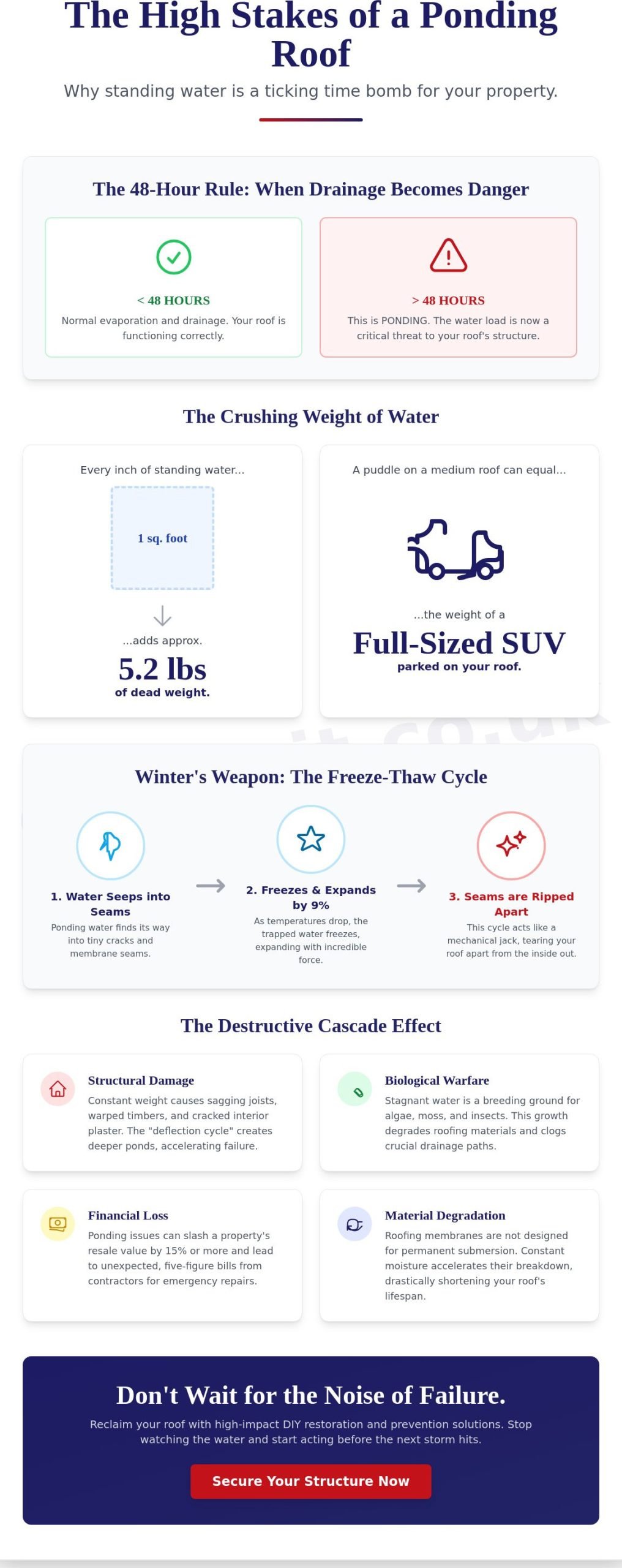
So, when does a harmless puddle become a problem? The industry benchmark is the 48-hour rule. If water is still standing on your roof more than 48 hours after rainfall in moderate conditions, you have a ponding problem. In the cool, damp UK climate, evaporation can’t be relied upon to do the heavy lifting. Proper drainage is the only solution.
According to Flat roof, this is a well-documented area of ongoing research and practical application.
Let’s kill a common myth: no flat roof should be perfectly flat. British Standards (BS 6229) recommend that a flat roof should have a minimum finished ‘fall’ or slope of 1:80 to ensure water flows away efficiently. When this system fails, it’s usually down to three culprits:
-
Debris Dams: A build-up of leaves, moss, and silt blocks gutters and outlets, creating an artificial dam.
-
Poor Design: The original roof may have been installed with an inadequate fall.
-
Structural Sagging: Over time, the roof deck can deflect or sag under its own weight, creating dips where water loves to collect.
This isn’t just an aesthetic issue. That standing water is a heavy, persistent threat to your home’s structure. It’s time to listen to the noise and take action.
How Pooling Water Damages Your Property
Ponding water is deceptively heavy. A puddle just 2.5 centimetres deep across a single square metre adds a whopping 25kg of extra load onto your roof structure. This constant pressure leads to a destructive cycle of ‘deflection’—the weight of the water causes the roof to sag, which allows it to hold more water, which causes it to sag even further. Look for tell-tale signs inside, like fine cracks appearing in your ceiling plaster.
In winter, the threat amplifies. When ponding water freezes, it expands with incredible force. This freeze-thaw cycle acts like a structural jack, relentlessly prying open seams, forcing its way into tiny cracks, and tearing apart the roofing membrane from within. It’s a quiet, slow-motion wrecking ball operating on your roof every winter.
Research published by Asphalt Roofing Manufacturers Association guide to ponding water shows that this is a well-documented area of ongoing research and practical application.
But the damage isn’t just structural. Stagnant water is a breeding ground for biological warfare:
-
Growth: Moss, algae, and lichens thrive in damp conditions, turning your clean roof into a green, swampy mess. Their root systems can physically penetrate and degrade the roof coating.
-
Unwanted Guests: Puddles attract insects like mosquitoes and create a damp, musty smell that kills your property’s aesthetic.
Ultimately, ponding water is relentless. It will exploit any weakness, however small, and find a way through. A persistent pond is not a question of if it will leak, but when.
DIY Detection: How to Identify Low Spots and Drainage Fails
You can’t fix a problem you can’t see. Before you can start any flat roof ponding prevention, you need to become a detective. You need to map your roof’s ‘hot zones’—the low spots where water refuses to leave. Don’t wait for the next downpour; take control with the Hose Test.
The Hose Test: A Step-by-Step Guide
This is the ultimate DIY diagnostic. It simulates rainfall on your terms, allowing you to see exactly how water behaves on your roof.
-
Prep the Scene: First, give the roof a thorough sweep. Remove all leaves, twigs, and loose dirt. You want to diagnose the structure, not a temporary blockage.
-
Simulate the Storm: Take a garden hose up to the roof. Starting at the highest point, let the water run across the surface towards the drains. Don’t blast it; you’re aiming for the flow of a steady rain shower.
-
Observe and Mark: Watch the water’s path. Does it flow freely to the outlets? Or does it start to pool in certain areas? Use chalk to mark the edges of any puddles that form and refuse to drain away. These are your target zones.
While you’re up there, check the vitals. Ensure downpipes, scuppers, and internal drains are completely clear. Use a long, sturdy straight edge across the marked low spots. If you see a significant gap underneath it, you’ve confirmed a structural dip.
Inspecting Seams and Flashings
Ponding water is most dangerous where two pieces of material meet. Pay close attention to seams, flashings around vents or skylights, and the edges of the roof. Look for signs of stress like ‘alligatoring’ (a pattern of cracking that resembles reptile skin) or crazing in the coating. If you have a fibreglass roof, check for any signs of delamination or blistering, which indicate trapped moisture—a prime target for a future leak.
Proactive Prevention Tactics: Keeping the Water Moving
The best way to deal with ponding water is to stop it from happening in the first place. This isn’t about waiting for disaster; it’s about a proactive rhythm of maintenance that keeps your roof healthy and your mind at ease. The golden rule is simple: keep it clean, and keep it sealed.
The Maintenance Rhythm
Schedule a roof inspection twice a year, ideally in late spring and again in autumn after the leaves have fallen. This 15-minute check is your first line of defence.
-
Clear the Debris: Sweep away all leaf litter, silt, and moss. This gunk acts like a sponge, holding water against the roof surface and clogging drains.
-
Check the Outlets: Ensure all gutters and downpipes are clear and flowing freely. A single blocked outlet can render an entire roof’s drainage system useless.
-
Scan for Damage: Look for any new cracks, blisters, or peeling seams that have appeared since your last check. Small issues are easy to fix; big ones are expensive.
Protective Coatings and Tapes
Your roof’s membrane is constantly under attack from UV radiation, which makes it brittle and prone to cracking over time. A protective coating is like sunscreen for your roof. Applying a high-quality GRP Roof Restoration Coating creates a seamless, waterproof shield that reflects UV rays and seals any potential weak spots before they can turn into leaks. For vulnerable areas like seams and joints, reinforcing them with high-performance butyl tape provides an extra layer of defence. The ‘Goo For It’ philosophy is simple: seal it right, seal it once, and disrupt the cycle of decay.
Go For It: Taking Control with DIY Ponding Solutions
You’ve identified the low spots. You understand the stakes. Now it’s time to stop watching the water and start acting. Forget expensive contractor quotes that push for a full replacement. The smart money is on DIY restoration, putting professional-grade materials in your hands to achieve a professional-grade result.
Surface Level Pro: The Ultimate Ponding Disruptor
For roofs with established dips and sags, a simple coating isn’t enough. You need to physically alter the landscape of your roof to eliminate the pond. This is where a roof levelling compound comes in. This material is specifically designed to fill the depressions, creating a smooth, sloped surface that actively forces water towards the drains.
Application is incredibly straightforward. If you can use a trowel to spread filler on a wall, you can use it to fix your roof. You simply apply the compound to the marked low spots and feather it out, creating your own custom ‘fall’. You’re not just patching a problem; you’re re-engineering the water flow for good.
The Complete DIY Repair Kit Advantage
Tackling flat roof ponding prevention is about having the right tools for the job. A comprehensive DIY roof repair kit is your best friend, bundling everything you need—from cleaning agents to levelling compounds and final waterproof coatings—into one high-impact package. It removes the guesswork and empowers you to achieve a lasting repair without the ‘noise’ and expense of external trades.
Don’t let standing water dictate the fate of your roof. This is your property, your project, and your result. It’s time to stop the ponding and protect your investment.
Frequently Asked Questions (FAQs)
Is ponding water on a flat roof always a bad sign?
Not always, but it needs to be monitored. Small puddles that evaporate within 48 hours are generally not a major concern. However, if water consistently remains for longer, it’s a clear sign of an underlying drainage or structural issue that needs addressing to prevent long-term damage.
How much standing water is too much for a flat roof to handle?
Structurally, most modern roofs can handle the weight. The real danger isn’t immediate collapse but the long-term effects. Any depth of water that remains for over 48 hours is ‘too much’ because it accelerates membrane degradation, encourages biological growth, and dramatically increases the risk of leaks through the freeze-thaw cycle.
Can I fix a sagging flat roof myself without replacing the whole thing?
Yes, absolutely. For localised sags and dips that cause ponding, you can use a DIY roof levelling compound. This allows you to fill the low spot and create a positive slope to the drain without the massive expense of a full structural replacement.
What is the cheapest way to stop water pooling on a flat roof?
The absolute cheapest method is proactive maintenance. Regularly clearing your roof of leaves and debris to keep drains and gutters flowing freely costs nothing but your time and can prevent the majority of ponding issues before they start.
Do I need a professional to install a Surface Level Pro?
No. Modern roof levelling compounds are designed with the DIY user in mind. They are typically single-component products that are easy to mix and apply with a simple trowel, making it a very accessible solution for any competent homeowner.
What happens if I ignore ponding water during the winter months?
Ignoring it in winter is incredibly risky. The water will freeze, expand, and act like a wedge, forcing open seams and creating cracks in the roof membrane. This freeze-thaw cycle can turn a minor issue into a major leak and significant structural damage in a single season.
Will ponding water void my roof’s existing warranty?
In many cases, yes. Most roofing material warranties stipulate that the roof must have positive drainage. If the manufacturer determines that damage was caused by a failure to address persistent ponding water (often classed as a maintenance issue), they may refuse to honour the warranty claim.