Choose a Good Day + Get Ready
Before you begin:
✔ Pick a dry, mild day (not raining, ideally above ~10 °C).
✔ Lay out your tools — roller, tray, brush, scissors, gloves, a clean rag, and solvent/cleaner for tools.
- Prepare the Roof Surface
Sweep away debris such as leaves, moss, dust, dirt and bird droppings.
Check for protruding glass fibres – if you see fibres sticking up, gently sand or trim them off so the surface is smooth.
Clean the surface with water and a mild detergent and then rinse thoroughly, so that it’s dust free before you start repairs.
Good surface preparation is critical – skipping this makes good adhesion and a watertight finish much harder.
- Mask the Edges (Optional but Helpful)
To get crisp, neat lines where the roof meets walls, trims, etc. apply tape around the edges before you coat and remove it later once the coating gets tacky.
- Apply Sealant to Cracks Using the Powerflo Gun
The Powerflo gun holds a cartridge of sealant. Squeeze the trigger to push sealant out smoothly into the crack. Smooth over with a filling knife or similar.
How to Use It:
Load the sealant cartridge into the Powerflo (instructions at the bottom of the page if you are unsure of how to do this).
Aim the nozzle into the crack or gap you want to fill.
Squeeze the trigger slowly to push sealant into the crack.
Keep the nozzle at a steady angle.
Don’t rush — you want solid, even packing of the sealant.
As the sealant comes out, use a small brush or tool (even a spatula or putty knife) to smooth it into a neat “mound” over the crack.
The goal is to fill the crack fully and leave the sealant slightly raised so it bridges the gap.
Tips:
Work in sections so the sealant doesn’t skin over in the gun or nozzle.
If a crack is shallow, don’t over-fill — just enough to create a smooth, filled area.
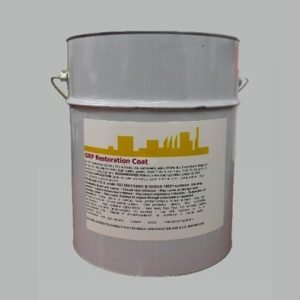
- Top Coat the Repairs with GRP Restoration Coat
Once you’ve sealed all visible cracks…
There are two options:
Wet-on-wet:
Apply the coating straight over the sealant before it dries. This lets the coating bond with the sealant.
Wait & coat:
Let the sealant firm up for a bit (a few minutes) until it’s no longer glossy and easily disturbed, then apply the coating.
How to Apply Coating:
Stir the GRP Roof Restoration Coat so it’s even and well mixed. Do not do this quickly otherwise you may cause air bubbles.
Pour some into a roller tray.
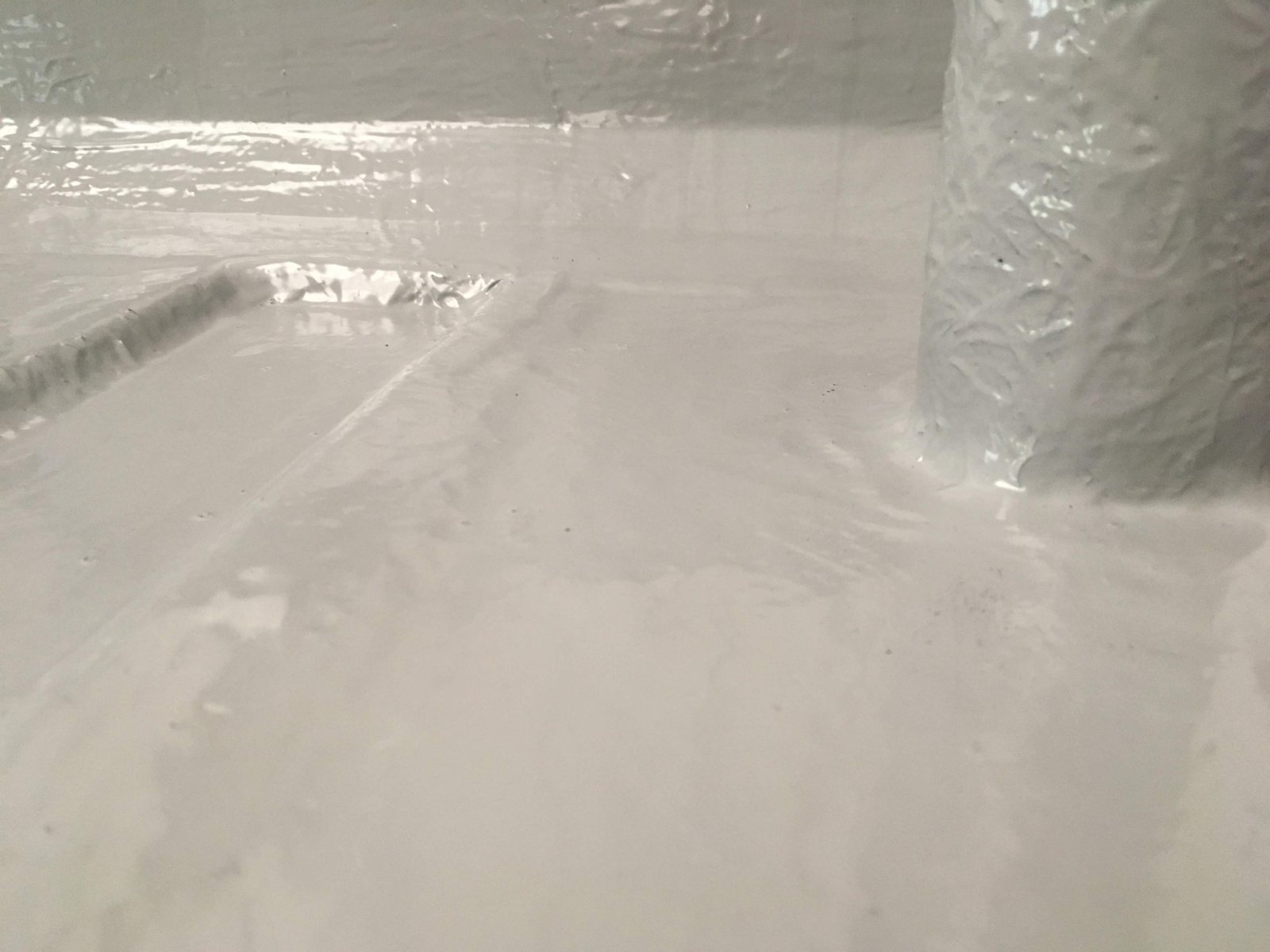
Using a brush or roller, apply a generous layer over the sealed repairs and surrounding roof surface.
Work carefully around edges and details.
The kit coverage is about 1 kg per m².
Make sure the repairs and roof surface are covered smoothly with no visible gaps.
This top coat not only seals the roof but also gives it a durable, weather-resistant finish.
- Remove the Edge Tape
As soon as the coating starts to feel tacky (it’s beginning to set):
Peel off your masking tape to leave clean edges without pulling the coating up later.
- Clean Up
Clean your roller, brush, tray and Powerflo gun promptly with xylene or suitable solvent before the coating cures — once dry it’s tough to remove. Discard the nozzle.
✔ If you have only light pinholes or very small cracks, you can sometimes skip the sealant — just coating over the area will fill them.
✔ If you need more sealant than the kit provides, you can buy extra separately.
✔ Give it 3–4 hours to start forming a skin — drying time depends on temperature and conditions.
- How to load a Powerflo gun:
- Prepare the Cartridge
Cut the Seal: Use a utility knife to cut the plastic nib off the top of the cartridge threaded neck. Screw the applicator nozzle onto the tube.
Trim the Nozzle: Cut the tip of the plastic nozzle at a 45-degree angle. A smaller cut creates a thinner bead, while a larger cut creates a thicker one.
Pierce the Inner Foil: Many cartridges have an internal foil seal. Use the thin metal rod (the “poker”) attached to the side or bottom of your gun to reach through the nozzle and puncture it several times.
- Load the Gun
Retract the Rod: Locate the small metal release lever (clutch) at the back of the gun near the handle. Press and hold it down with your thumb while pulling the long metal plunger rod all the way back until it stops.
Insert the Tube: Place the nozzle end of the cartridge into the front frame of the gun first, then drop the flat base into the back of the cradle.
- Secure and Test
Engage the Plunger: Gently push the metal rod forward until the circular plate at the end of the rod is flush against the bottom of the cartridge.
Prime the Gun: Squeeze the trigger a few times until you feel resistance and the sealant begins to move into the nozzle. Test the flow on a piece of scrap paper or cardboard before starting your project.


 Only ONE top coat needed