
A standard pressure washer is the fastest way to turn a minor moss problem into a £5,000 structural disaster. Most homeowners realise too late that aggressive scrubbing on fragile asbestos or GRP sheets doesn’t just clear the grime; it destroys the integrity of the surface. You’ve likely already wasted money on a generic roof cleaner that promised a fresh look but left a residue that makes paint peel within six months. It’s frustrating to watch your hard work wash away because the prep wasn’t up to scratch.
Key Takeaways
- Stop the rot. Learn why a pristine surface is the non-negotiable foundation for any DIY repair that actually sticks.
- Lock in your kit. Discover why selecting the right high-performance roof cleaner and low-pressure tools beats a destructive power wash every time.
- Gear up like a pro. Master the essential safety checklist-from harnesses to non-slip boots-to keep your mission on track.
- Customise your attack. Get the specific “softly-softly” tactics needed to handle sensitive materials like asbestos and GRP without causing damage.
- Seal the deal. Understand the critical drying times and prep steps required to transition from a deep clean to a permanent restoration.
Why Roof Cleaning is the Ultimate Pre-Game for Repair
Stop right there. Don’t touch that paintbrush yet. You’re looking at a metal roof that’s survived years of brutal British weather. It’s grimy. It’s gritty. It’s covered in a layer of filth that’s waiting to ruin your hard work. If you slap paint over that mess, you’re literally throwing your budget into a skip. Cleaning isn’t just a chore; it’s the absolute foundation of your entire restoration project. Think of it as the ultimate pre-game. You wouldn’t wrap a dirty car, so don’t even think about coating a dirty roof.
According to 2022 UK building maintenance data, 60% of coating failures are directly linked to poor surface preparation. That is a massive waste of time and cash. A solid Roof cleaning overview shows that removing biological growth is essential for long-term protection. Dirt, moss, and lichen aren’t just eyesores. They are physical barriers. They stop your high-performance coatings from actually touching the metal substrate. Beyond the bond, a clean roof is a transparent roof. Once the gunk is gone, you’ll spot every hairline fracture and structural weakness. It is much better to find a 2mm crack now than a catastrophic leak in six months. Don’t just wash it; prep it for a total performance upgrade.
Making Noise: Why Dirt is the Enemy of Adhesion
Surface contaminants act as a “release agent” for new paints and coatings. They are working against you from the second you start. Even invisible biofilm can cause your repair kit to peel within 90 days. This microscopic layer of biological slime creates a slick surface where nothing sticks. Roof cleaning is the mechanical and chemical removal of debris to ensure a 100% bond. You need a high-impact roof cleaner to strip away the noise and leave the metal ready for action. For property owners who want to ensure a professional-grade finish, ABC Mould Cleaning Solutions offers expert remediation to guarantee the surface is perfectly prepped. If the surface isn’t surgically clean, your restoration is already failing.
The Vibe Check: Aesthetic vs. Functional Cleaning
The Essential Roof Cleaner Checklist for DIY Savages
Stop dreaming about the finish and start obsessing over the prep. A metal roof is a high-performance surface. If it’s covered in grime, your new paint job will fail within 12 months. We don’t do failure. We do impact. This is about stripping away the noise of nature to reveal a pristine canvas. You need to be aggressive and precise.
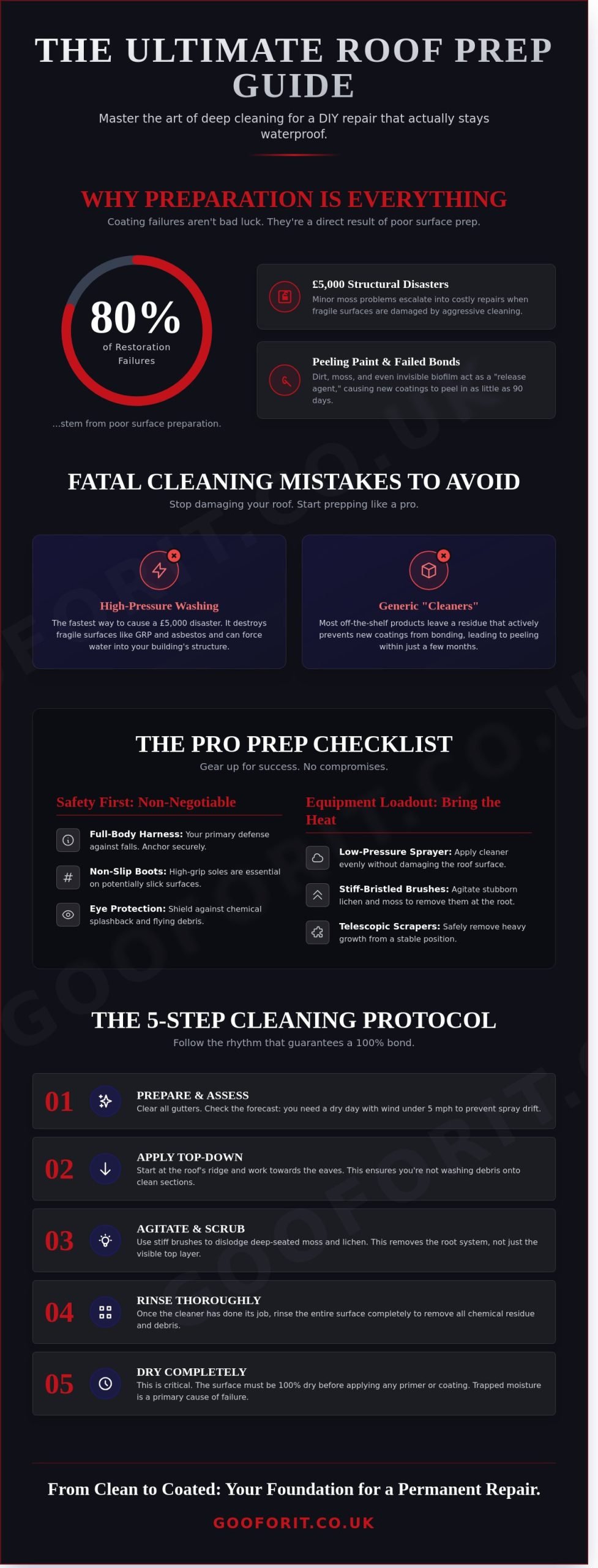
Watch the forecast like a hawk. You need a dry day with wind speeds under 5 mph. High winds turn your chemical spray into a drifting hazard for your car and your neighbours. Before you load your sprayer, clear the gutters completely. If your drainage is blocked, you’re just creating a stagnant pond of filth at the edge of your house. Clean gutters ensure the roof cleaner and organic debris exit the scene immediately.
Equipment Loadout: What You Need to Bring the Heat
Gear up or go home. You need tools that work as hard as you do. For professional-grade supplies that withstand the rigours of exterior cleaning, brands like J Racenstein offer the precision tools necessary for a top-tier result. Telescopic scrapers are essential for reaching those awkward spots from a stable position on the ridge. Stiff-bristled brushes are the heavy hitters for agitating stubborn lichen patches that have claimed your roof as their own. Keep the pressure low. High-pressure jet washes are a disaster for metal roofs. They can disrupt the seals and force water into the internal structure. Use a low-pressure sprayer to apply your chemical loadout evenly across the panels.
Step-by-Step: The Cleaning Rhythm That Works
Efficiency is the name of the game. Start at the ridge and move toward the eaves. This top-down flow ensures you aren’t washing dirt onto clean sections. Apply your roof cleaner solution and let it dwell for exactly 15 minutes. This dwell time allows the chemicals to break down tough organic bonds. Scrub the heavy areas with intent and rinse with a steady, gentle stream. If you’re ready to transform your property and really go for it, this is where the magic starts. You’re revealing the true surface colour and creating the perfect bond for your primer.
Surface Warfare: Customising Your Clean for Asbestos, GRP, and Metal
One size fits none. Your roof has its own personality and its own set of problems. You have to match the vibe of your cleaning method to the material under your boots. Treating industrial steel like delicate GRP is a fast track to a peeling disaster. The right roof cleaner strategy ensures your coating actually sticks rather than just sitting on top of the grime. Don’t just wash it. Dominate the surface.
Asbestos Awareness: Cleaning Without the Chaos
Safety is the only priority when dealing with asbestos. This is old-school tech that demands total respect. If you disturb those sheets, you risk releasing hazardous fibres into your workspace. Never dry-scrape the surface. Never use a high-pressure power-washer. Both methods create a dust cloud of trouble that you don’t want. Keep the sheets damp at all times to suppress dust. Use a specialist fungicidal wash to kill off spores and moss. This chemical approach does the heavy lifting without mechanical disruption. It keeps the surface intact and the air clear. Once you’ve handled the grime, look at the bigger picture. Check out our guide on asbestos roof repair for the next steps in sealing your structure safely.
Metal and GRP: Stripping the Grime for Maximum Impact
Metal roofs are magnets for oily deposits and industrial fallout. You can’t just splash water on them and hope for the best. Use a high-performance degreasing agent to strip away the film. If you leave oil behind, your paint will slide right off within months. Look for rust. Treat every patch of oxidation before you even think about a brush. GRP (fibreglass) needs a different kind of focus. These surfaces often carry a waxy residue from the manufacturing process. Your roof cleaner must leave the surface bone-dry and residue-free.
Maintaining industrial-grade surfaces requires a professional approach to decontamination. Just as Washify applies expert mobile cleaning to keep heavy machinery and trucks free from corrosive buildup, your roof demands a similar commitment to stripping away industrial fallout before restoration.
If you are managing an industrial site where oil contamination is a constant challenge, you can discover BioKem Oil Services for specialist oil filtration and analysis that keeps your critical systems as clean as your newly prepped roof.
- Apply an industrial-grade degreaser to metal to neutralise oily films and fallout.
- Key the GRP surface slightly after cleaning to give the coating a physical grip.
- Rinse everything until the water runs clear.
- Ensure no chemical film remains to disrupt the bond.
You want a surface that’s hungry for paint. Rinse thoroughly. Any leftover chemical film will disrupt your coating’s impact and ruin the finish. Go for a clean that creates a perfect foundation. It’s about prep, not just polish. Make some noise with a finish that actually lasts because the groundwork was solid.
Fatal Cleaning Mistakes That Disrupt Your Roof’s Integrity
Pressure Washing Pitfalls: Don’t Blast Your Tiles to Bits
High pressure is the #1 way to ruin a perfectly good roof. Blasting away at 3,000 PSI isn’t cleaning; it’s a demolition project. This force drives water directly under the laps, creating internal leaks that rot your rafters before the first coat of paint even touches the metal. If you’re working with concrete elements, you’re stripping the protective granular layer. Industry tests show that high-pressure blasting can increase surface porosity by 22%, making the material soak up water like a sponge. A chemical soft wash with a dedicated roof cleaner is always superior to high-pressure blasting.
Chemical Chaos: Avoiding the Wrong Vibe for Your Surface
Ignoring the gutters is another fatal error. A backlog of sludge leads to a 30% increase in moisture retention during the cleaning process. If that water doesn’t have a clear exit, it finds a way into your fascia boards. Finally, watch your step. Walking on a metal roof without identifying the load-bearing purlins is a disaster. One wrong move causes permanent buckling or “oil canning” that no paint can hide. You want a smooth finish, not a dented mess. Focus on the impact of your prep, not just the speed of the job.
Ready to make some noise and get your project started properly? Go for it and prep like a pro.
From Clean to Coated: Going For It with GRP Restoration
You’ve put in the graft. The surface is gleaming. But a clean roof is just a blank canvas. Now it’s time to seal the deal. This is where you transform a high-maintenance metal sheet into a high-performance asset. Don’t let your hard work go to waste by leaving the metal exposed to the British elements. The real magic happens when you apply the protection. It’s time to stop cleaning and start creating a legacy for your building.
The Dry-Down: When is Your Roof Ready for the Goo?
Patience is your best friend here. Moisture is a silent killer for professional coatings. If you trap even a tiny bit of damp under the surface, you’re inviting total disaster. We’re talking bubbles. We’re talking peeling. We’re talking a complete waste of your time. Industry stats show that over 82% of coating failures stem from trapped moisture or poor surface temperature control. Don’t be part of that number.
Use a moisture meter to be certain. If you don’t have one, use the clear plastic tape test. Stick a square of clear plastic to the metal and seal the edges. Wait 20 minutes. If you see any fogging or condensation under the plastic, the roof isn’t ready. The vibe needs to be bone-dry. You also need to check the thermometer. Ensure the temperature is holding steady above 5 degrees Celsius. Anything lower and the curing process won’t hit the right rhythm. Wait for that peak window of dry weather to ensure your application sticks for the long haul.
Sealing the Deal: Why Cleaning Alone Isn’t Enough
A quality roof cleaner is essential for removing the immediate problem. It kills the moss and shifts the grease. But it doesn’t provide the permanent solution. Cleaning is the reset button; coating is the ultimate upgrade. Our GRP Restoration Coating acts as a waterproof shield. It’s a seamless skin that disrupts the cycle of rust and decay that plagues untreated metal.
Once the coating is applied, dirt has nowhere to hide. The surface becomes ultra-smooth. This means future maintenance is a breeze because rain washes away debris that used to stick. You’ll also notice the silence. Metal roofs are notoriously loud during a heavy UK downpour. This coating dampens that acoustic impact. It turns a clanging metal sheet into a quiet, leak-free powerhouse. It’s about making noise with your results, not your roof. Go for the finish that lasts.
Own the Atmosphere and Secure Your Lid
Your roof isn’t just a lid; it’s the ultimate canvas for a total vibe shift. Skipping the prep is a total buzzkill that stalls your restoration before the first coat even hits. You’ve now got the full breakdown on why a high-performance roof cleaner is the mandatory first step for any DIY savage. Whether you are tackling 1950s asbestos cement or modern GRP, the strategy remains the same: clean hard, prep smart, and don’t cut corners. While we operate from a specific location, our impact is felt nationwide, delivering specialist coatings that transform leaks into legends. Our kits are engineered for pro-level success, giving you high-octane results without the need for a massive contractor crew. It is time to disrupt the decay and reclaim your space. The mission is clear. The gear is ready. It’s your turn to make some noise and secure your lid for the long haul. To make sure your interior matches the impact of your newly restored roof, Commercial Carpet Cleaners Stockport provides professional-grade cleaning for carpets and upholstery. You can also discover The Rutland Cleaning Company for high-octane upholstery and carpet care, or learn more about Apartment Clean for professional house and apartment cleaning in the Manchester region.
Stop the leaks and start the restoration; get your Goo For It kits today!
Frequently Asked Questions
Can I use a pressure washer to clean my roof?
Yes, you can use a pressure washer, but you must keep the setting below 2,500 PSI. Metal roofs are tough, but excessive force blasts through vital seals and creates internal leaks. Use a wide fan tip to spread the impact. It gets the job done without ruining the vibe of your metal panels. Just go for it with caution.
Is it safe to clean an asbestos roof myself?
No, cleaning an asbestos roof yourself is a massive risk you shouldn’t take. The Health and Safety Executive (HSE) reports that asbestos exposure contributes to 5,000 deaths every year in the UK. Disturbing these old fibres is dangerous for you and your neighbours. Hire a licensed professional to handle the 100% hazard rate. Safety is the only option here.
How long does a roof cleaner solution take to work?
Your roof cleaner needs exactly 20 minutes to disrupt the grime before you start rinsing. Don’t let the solution dry out on the metal. If it dries, the chemicals stop working and leave a stubborn film. Keep the surface damp for the duration. It is about fast action and immediate results. Watch the dirt melt away in less than half an hour.
Will roof cleaner kill the moss permanently?
A quality roof cleaner kills existing moss instantly, but it won’t stop it from returning forever. Moss spores are constantly moving in the UK air. You will likely need a fresh application every 24 months to keep the surface clear. Think of it as a reset button for your roof. Regular maintenance is the only way to stay ahead of the green.
What is the best time of year to clean a roof in the UK?
Late spring is the ultimate time to clean your roof in the UK. Aim for a dry day with temperatures between 12°C and 18°C for the best results. You want to avoid the 150 days of rain the UK averages annually. Overcast days are even better because they stop your solution from evaporating too quickly. Hit that window for maximum impact.
Do I need to rinse the roof cleaner off after application?
You must rinse the surface thoroughly with fresh water after cleaning. If you’re painting the metal, any leftover residue will cause your new coat to peel within 6 months. Rinsing neutralises the surface and ensures the paint bonds perfectly. It is a non-negotiable step for a professional finish. Clean, rinse, and dry to get the best look.
How much roof cleaner do I need for a standard garage roof?
You will need 5 litres of concentrated solution for a standard UK single garage. Most single garages measure roughly 14 square metres in size. A 5-litre bottle typically covers 30 square metres once you have diluted it properly. That gives you plenty of liquid to saturate the metal. Don’t skimp on the product if you want total coverage.