
Why Do Fibreglass Roofs Crack? (And What To Do About It)
Fibreglass, or GRP (Glass Reinforced Plastic), is one of the most popular flat roofing materials in the UK – and for good reason. It’s tough, long-lasting, and when properly installed, almost completely seamless. So, when cracks appear, it can feel alarming. The good news is that cracking is common, the causes are well understood, and in most cases, you can fix it yourself without calling in a roofer.
Here’s a straightforward guide to why fibreglass roofs crack, what the warning signs are, and what you can do to sort it out.
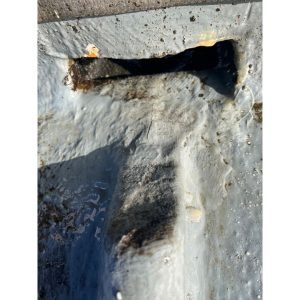
The Most Common Reasons Fibreglass Roofs Crack
- Thermal Movement
Thermal movement is one of the biggest causes of cracking in GRP roofs, and it’s something that affects virtually every fibreglass flat roof in the UK at some point.
Fibreglass expands in heat and contracts in cold. Over the course of a year and even over the course of a single day your roof is constantly moving very slightly in response to temperature changes. Over time, this repeated movement puts stress on the surface of the GRP, eventually causing hairline cracks to appear. These are often called stress cracks, and while they can look minor, they’re a pathway for water to get in.
The edges and corners of a roof are particularly vulnerable because that’s where movement stress tends to concentrate.
- Poor Original Installation
A fibreglass roof that wasn’t laid correctly is much more likely to crack prematurely. Common installation mistakes include insufficient thickness of the GRP laminate, inadequate reinforcement, poor adhesion to the substrate, and not allowing the roof to cure fully before foot traffic or loading.
If your roof is relatively young and already showing cracks, installation quality is worth considering.
- Lack of Maintenance
This is one of the main problems we come across when people call us up for help. Fibreglass roofs are often described as “maintenance-free,” and while they do require less attention than felt or bitumen roofs, they’re not entirely bulletproof. The protective topcoat (called the gelcoat) can degrade over time through UV exposure, leaving the GRP laminate beneath more vulnerable to stress and cracking.
A roof that has been left without any attention for many years is far more likely to develop cracks than one that has had occasional inspections and recoating.
- Foot Traffic and Impact
Fibreglass is strong, but it doesn’t like point loading, that is, concentrated weight in a small area. Walking directly on a GRP roof, particularly without boards to spread the load, can cause cracks or stress fractures, especially on older or thinner laminates.
Similarly, impact from falling branches, debris, or dropped tools can cause localised cracking.
- Substrate Movement
The boards or decking underneath your fibreglass roof can move, especially if there’s any moisture ingress into the timber. If the substrate shifts or swells, it can push up against the GRP from below and cause cracking on the surface. This is particularly worth checking if you notice cracks appearing in linear patterns that seem to follow the lines of the boards beneath.
What Do Fibreglass Roof Cracks Look Like?
GRP cracks usually fall into a few categories:
- Hairline cracks. Fine surface cracks, often caused by thermal movement or UV degradation of the gelcoat. These can be tricky to spot until water is already getting in.
- Stress cracks. Slightly wider cracks, often appearing at edges, corners, or around upstands and trim. Usually caused by movement over time.
- Spider cracking. A network of fine cracks spreading out from a central point, often caused by impact or localised stress.
- Pinholes. Tiny holes in the surface rather than true cracks, usually a sign that the original laminate wasn’t fully saturated during installation.
Will Cracks Cause Leaks?
Not always immediately, but they will if left untreated. Hairline cracks in particular can seem harmless for a season or two, but water finds its way in eventually. Once moisture gets beneath the GRP it can start to delaminate the laminate, swell the timber substrate, and cause much more significant damage. The lesson is always the same: deal with cracks sooner rather than later.
How To Fix a Cracked Fibreglass Roof
The approach depends on the extent of the cracking.
For small, isolated cracks or holes, the Speedpatch is the simplest solution. It comes as a soft patch that you apply over the damage, and it cures hard in sunlight – no mixing, no mess. You can also pick it up as part of a kit if you need a few accessories alongside it.
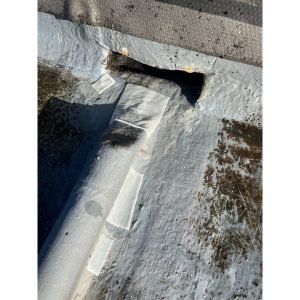
For cracks alongside a full surface restoration, the GRP Roof Restoration and Crack Repair Kit is the ideal choice. It includes a crack-filling sealant alongside the GRP Restoration Coat, so you can seal up any damage first and then apply a protective coating over the whole roof in one job. The restoration coat goes on in a single coat and cures to a very tough, waterproof finish.
For a roof with holes as well as general degradation, the GRP Roof Coating & Hole Repair Kit covers both – patching larger damage with a Speedpatch before overcoating the whole surface.
If your roof is showing signs of structural weakness or delamination in addition to surface cracking, the GRP Roof Restoration and Reinforcement Kit adds a fibreglass matting reinforcement layer into the process, effectively adding a new structural layer over the old one.
In all cases, the GRP Roof Restoration Coating is the finishing product that brings everything together – protecting the repaired surface from UV, water, and further thermal movement for years to come.
Can I Do It Myself?
Yes, and most people do. GRP roof repair doesn’t require specialist skills — just a dry day, clean surface preparation, and following the instructions. All of the Goo For It fibreglass repair products come with clear step-by-step guidance, and the team is always on the phone if you get stuck: 01453 872850.
In Summary
Fibreglass roofs crack mainly because of thermal movement, age, UV degradation, and occasionally poor original installation or impact damage. The cracks themselves aren’t cause for panic, but they do need dealing with before water gets in and causes bigger problems. Whether you’ve got one small crack or a whole roof that needs refreshing, there’s a straightforward fix available and you can almost certainly do it yourself in a weekend.
Browse the full range of GRP and fibreglass roof repair products at Goo For It or give us a call and we’ll point you in the right direction.