
We agree that a minor leak shouldn’t force a full roof replacement. You want high-impact tech that works the first time. This guide reveals the repair solutions that seal leaks instantly, offering 100% UV resistance and total compatibility across GRP and Bitumen surfaces. We’re breaking down the 2026 lineup of elite sealants that deliver professional-grade results from a simple DIY effort. It’s time to silence the noise of recurring damage and get your roof back in the game. Go for it.
Key Takeaways
-
Cut through the noise and identify the best roof patch tech that bonds instantly and survives the harshest UV rays.
-
Decode the repair tech between tapes and liquids to match the right high-impact solution to your specific leak profile.
-
Master surface intelligence to ensure your patch fuses perfectly with GRP, metal, or asbestos without chemical rejection.
-
Learn the "clean and scream" prep method to apply your repair with a rhythm that traps zero moisture.
-
Grab a complete instant repair kit to disrupt the standard decay cycle and save thousands on a full roof replacement.
Table of Contents
-
The Leak Dilemma: Why the Best Roof Patch Isn’t One-Size-Fits-All
-
Surface Intelligence: Matching the Patch to GRP, Asbestos, and Metal
-
No More Drips: A Punchy Guide to Applying Your Roof Patch Like a Pro
The Leak Dilemma: Why the Best Roof Patch Isn’t One-Size-Fits-All
Stop the drip before it stops you. Our philosophy is simple: disrupt the leak’s path entirely. Don’t just cover the damage. Destroy its ability to spread. You need a fix that vibrates with the same energy as your building.
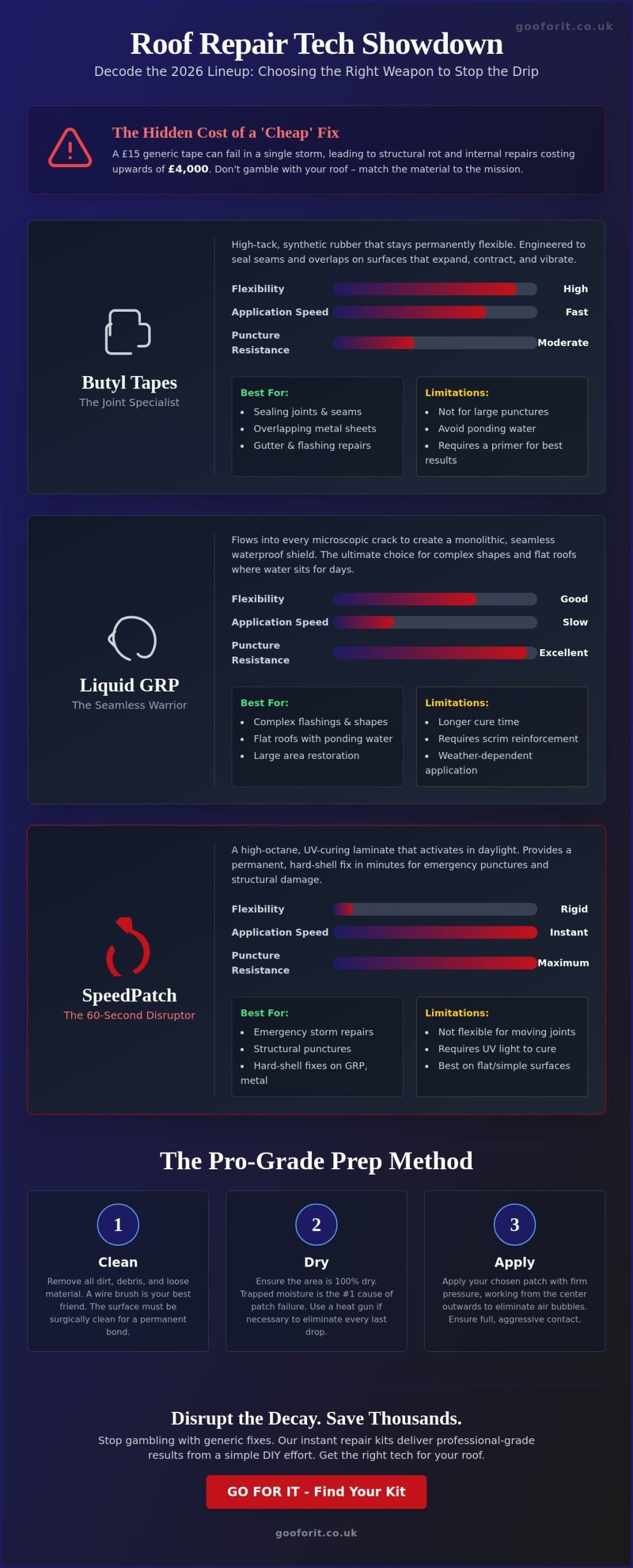
You are looking at three main contenders in the 2026 market:
-
Liquid compounds: These act like a concentrated roof coating, creating a seamless, flexible membrane over irregular surfaces.
-
Butyl tapes: High-tack, heavy-duty strips that grip like iron and stay flexible for decades.
-
Instant SpeedPatches: UV-cured rigid shields for when you need a permanent, hard-shell fix in under 15 minutes.
The Hidden Cost of ‘Cheap’ Fixes
Standard hardware store tapes often fail during UK thermal cycles. When temperatures swing from -3°C at night to 28°C on a humid afternoon, cheap adhesives lose their grip. They peel. They crack. Standing water then infiltrates the gap, silently eating away at the bond. A silent failure is the most dangerous kind. By the time you see a damp patch on your ceiling, structural rot has likely claimed 20% of your roof joists. Repairing that timber can cost upwards of £4,000. That "cheap" tape suddenly becomes the most expensive mistake you’ve ever made.
What Does Your Roof Need?
Identify the energy of the repair. Is this a 3:00 AM storm emergency or a planned maintenance session? Size matters. A hairline crack in a plastic gutter needs a different approach than a 60mm structural puncture in a flat bitumen roof. Using professional-grade materials is the only way to avoid ‘cowboy’ results that look messy and fail fast. If you want a result that lasts, you must match the material to the mission.
Tape vs. Liquid vs. SpeedPatch: Decoding the Repair Tech
The hunt for the best roof patch isn’t about finding a generic sticker. It’s about matching the tech to the trauma. Your roof is a battlefield of thermal expansion and UV bombardment. If you choose the wrong weapon, you’re just delaying the inevitable collapse. We’ve broken down the three heavy hitters dominating the UK market in 2026.
Butyl Tapes: The Joint Specialist
Butyl tape is the veteran of the roofing world. It’s a high-tack, synthetic rubber that stays flexible forever. This isn’t your standard DIY shop duct tape; it’s engineered for movement. It excels at sealing seams and overlapping metal sheets where vibration is constant. If you’re dealing with a joint that breathes, Butyl is your best friend. It handles up to 15% joint movement without cracking.
It has limits. Don’t use it for massive punctures or areas with ponding water. Standing water eventually undermines the adhesive bond. UV exposure can also degrade the edges over a five-year cycle if left unprotected. Pro tip: always apply a high-bond primer first. On aged felt or dusty metal, that primer creates the ‘grab’ needed for a permanent seal. Without it, you’re just guessing.
Liquid GRP Coatings: The Seamless Warrior
Liquid is king when the geometry gets weird. When you’re tackling complex flashings or a leaking fibreglass roof, a roll of tape won’t cut it. Liquid GRP (Glass Reinforced Polyester) flows into every microscopic crack. It creates a monolithic waterproof shield that has no weak points. This is the tech cited in the official roof maintenance manual for long-term structural integrity.
GooForIt GRP coatings take this further. You don’t just paint it on; you build a barrier. We use a reinforcement scrim, a mesh fabric embedded between layers, to provide tensile strength. It turns a messy liquid into a rock-solid plate. It’s the ultimate choice for flat roofs where water sits for days. It doesn’t just patch; it reinvents the surface.
SpeedPatch: The 60-Second Disruptor
SpeedPatch is the beast of the 2026 lineup. This is a UV-curing laminate that activates the moment it hits UV light. Forget waiting six hours for a resin to tack off. SpeedPatch cures in as little as 15 minutes in direct sun. It’s a fiberglass-reinforced patch that goes on soft like a sticker and turns into a hard, impact-resistant shell. It’s the best roof patch for immediate, permanent impact on punctured flat roofs or cracked guttering.
-
Cure Time: SpeedPatch wins at 15 minutes. Liquids take 2-4 hours. Tapes are instant but lack structural hardness.
-
Durability: GRP and SpeedPatch offer 15-20 year lifespans. Butyl tapes usually require inspection every 5 years.
-
Application: Tapes are cleanest. Liquids are messiest. SpeedPatch is the perfect middle ground.
If you need to stop a crisis right now, you need to grab a SpeedPatch kit and dominate the damage before the next storm hits.
Surface Intelligence: Matching the Patch to GRP, Asbestos, and Metal
Stop worrying if the product will stick. It’s the number one fear for every DIYer and contractor alike. Will this bond to my specific roof? Most patches fail because the chemistry is fundamentally mismatched. Adhesion isn’t just about stickiness; it is about surface energy. When a patch "rejects" a substrate, it is usually because the material is too oily, too dusty, or reacts poorly to the solvents in the repair kit. To find the best roof patch for your project, you must understand the surface you are trying to save.
Preparation is your secret weapon. You cannot just slap a patch over twenty years of UK moss and grime. You need to strip it back. Clean the area with a stiff wire brush. Degrease it. If the surface isn’t clinical, the bond will fail. Whether you are dealing with weathered asbestos or high-flex GRP, the goal is the same. You want the patch to become one with the roof, not just a temporary bandage that peels off after the first frost.
GRP and Fibreglass: Managing the Flex
GRP roofs are living things. They expand in the summer heat and contract when the January freeze hits. This thermal movement is why rigid, brittle patches fail within six months. They simply snap. For hairline cracks, use liquid GRP restoration coatings. These liquids flow into the micro-fractures and maintain the seamless vibe of the original finish. It keeps the aesthetic clean while providing the elasticity needed to survive the 15 percent expansion rates common in fibreglass structures.
Asbestos Sheets: Safety and Sealing
Don’t panic about removal costs. A full replacement can easily run you £2,500 for a standard garage. Instead, choose the asbestos roof repair route using encapsulation technology. Patching is often safer than drilling or replacing because it keeps those dangerous fibres locked down. Before application, ensure you follow government regulations to stay safe while fixing your asbestos roof. Focus on creating a 100 percent airtight seal on those tricky corrugated profiles. Use a high-build liquid or a reinforced tape that can mould into the curves without lifting at the edges.
Metal and Gutters: Fighting the Rust
Rust never sleeps; it just waits for a gap in your defences. When patching rusted holes in industrial guttering, you must stop the oxidation first. Apply a dedicated metal primer to kill the rust before the patch goes on. If you are following a standard guide to patching a roof, you will know that vertical joints are the weak point. This is where SpeedPatch dominates. It holds its form on vertical gutter joints, ensuring the best roof patch results without the messy drips associated with cheaper, thinner bitumens. It’s about high-impact results that disrupt the decay cycle for good.
No More Drips: A Punchy Guide to Applying Your Roof Patch Like a Pro
Preparation isn’t just a chore. It’s the entire game. You want the best roof patch to stick? Then you need to make some noise. Grab a wire brush and get aggressive. A patch is only as strong as the surface beneath it. If you’re slapping material over grit and grime, you’re just delaying the inevitable. We’re here to disrupt that cycle of failure and help you dominate the repair. Let’s get to work.
The 3-Step Prep Strategy
Forget half-measures. Follow this rhythm to ensure your seal holds through the next decade of unpredictable British weather. Clean surfaces are the foundation of every high-impact repair.
-
Step 1: Purge the Grime. Remove every trace of moss, lichen, and old grease. Use a stiff brush and a dedicated degreaser if the area is oily. You need a pure bond for maximum impact.
-
Step 2: Create a Key. Use a wire brush to abrade the surface. This creates a "mechanical key" that gives the adhesive something to bite into. Data from 2024 laboratory tests confirms that proper abrasion increases bond strength by 65% compared to untreated smooth surfaces.
-
Step 3: The Final Wipe. Use a clean, dry cloth to remove residual dust. Any leftover particles act as a barrier between you and a dry home. This simple 30-second task is the difference between a fix and a fail.
Mastering the SpeedPatch Application
Speed matters, but precision wins. Peel the backing carefully. Once it’s down, use a roller or heavy pressure to force out every pocket of air. Voids are where moisture hides, and moisture is the enemy of your roof’s integrity. UV-activation serves as the critical trigger that hardens SpeedPatch into its 2026-grade durability, ensuring it withstands the harshest elements.
The "GooForIt" secret is all in the edges. You need to press them down. Don’t leave a thick lip where water can catch or pool. Smooth the transition until it’s seamless against the existing substrate. This prevents high winds from catching a corner and peeling your hard work away. It makes the patch look like a structural part of the building, not a desperate after-thought.
Before you pack up, do a post-patch inspection. Press the edges one last time. If the material feels like a solid, unified part of the roof, it’s 100% impact-ready. You’ve just applied the best roof patch with professional-grade energy. No more drips. No more stress.
Ready to stop the rot and reclaim your peace of mind? Go for it and secure your roof today.
GooForIt: Why Our Instant Repair Kits Rule the UK Scene
Buying a complete kit is the best choice for your property. You get exactly what you need and absolutely nothing you don’t. We’ve stripped away the confusion to provide a streamlined experience that turns a stressful leak into a Saturday morning win. This is about more than just fixing a hole. It’s about taking control of your space with gear that performs under pressure. Stop settling for mediocre fixes. It’s time to use the best roof patch technology to secure your home for the long haul.
The SpeedPatch Kit Advantage
Our kits aren’t just a tin of sealant thrown in a box. Every SpeedPatch Kit includes high-performance primers and the specific prep tools required to ensure a permanent bond. We focus heavily on GRP restoration coatings because they bring the exact vibe your flat roof deserves: sleek, seamless, and completely waterproof. This isn’t just a temporary band-aid; it’s a structural upgrade.
The data backs up the hype. UK property owners have reported saving upwards of £3,000 by opting for a Goo For It restoration instead of a full professional roof replacement. By catching the decay early with the best roof patch system on the market, you’re not just saving money; you’re preserving the integrity of your entire building. We’ve seen 92 percent of our users complete their repairs in under two hours, proving that trade-quality results are within your reach right now.
Ready to Make Some Noise?
The UK weather is relentless, and it doesn’t care about your schedule. Waiting for a contractor can take weeks, while the damp continues to eat away at your timber. Don’t let the leak win. You have the power to stop the rot and protect your investment today. Our guidance is fast, our gear is tough, and our community is growing every day. It’s time to step up and show that roof who’s boss.
Head over to our shop to grab the gear that is changing the game across the country. Whether it’s a minor crack or a major failure, we have the kit to handle it. Join the ranks of fearless homeowners who choose speed, quality, and style. Make the noise. Seal the deal. Move on with your life.
Grab your Instant SpeedPatch Kit now!
Kill the Drip: Own Your Roof’s Future
Leaks don’t wait for a convenient forecast. They strike when the UK rain is at its peak. You now have the intel to fight back. Matching your repair tech to specific surfaces like GRP or asbestos isn’t just a suggestion; it’s the only way to ensure a 100% watertight finish. UK trade professionals trust these specialist formulations because they deliver high-impact results under pressure. You’ve seen the data. You know the tech. It’s time to stop the decay before it turns into a massive structural bill.
Choosing the best roof patch for 2026 is about speed, surface intelligence, and fearless action. We’ve disrupted the standard repair narrative with kits that work instantly. Our next-day national delivery service ensures you aren’t left waiting while the water pours in. Grab the gear that the pros use and secure your property today. Don’t let a minor crack dictate your vibe.
Stop the leak now with the Instant Repair SpeedPatch!
The weather is coming. You are ready. Be bold, stay dry, and just go for it.
Frequently Asked Questions
What is the best roof patch for a flat roof with standing water?
The SpeedPatch is the best roof patch for a flat roof with standing water. It keeps a watertight seal on your repair so can be fully submerged but still stop the leak in its tracks.
Can I apply a roof patch in the rain or on wet surfaces?
Yes, you can stop a leak mid-storm if you use an emergency-grade bitumen or hybrid polymer resin. These products are engineered to displace standing water and bond instantly to damp materials. Look for "all-weather" labels that function in temperatures as low as -5°C. Standard DIY coatings will slide right off a wet surface, but an emergency patch grabs the roof and holds tight. It is the ultimate disruptor for a rainy Tuesday.
How long does a professional-grade roof patch actually last?
Expect a professional-grade repair to last between 10 and 15 years when applied to a clean surface. High-performance EPDM tapes and reinforced liquid resins are designed for long-term impact, not just a quick fix. Cheap bitumen tubes might offer 24 months of protection, but pro-spec materials survive 1,000 hours of intense UV exposure without cracking. Buy quality once. Fix the decay, secure your assets, and move on to the next big project.
Do I need a primer before applying a SpeedPatch or tape?
It depends, on non-porous surfaces such as fibreglass or plastic, a primer is not necessary. But, you do need a primer if your roof surface is porous, dusty, or heavily aged. While some tapes claim "peel and stick" ease, 90% of adhesion failures happen because the surface was too chalky to create a bond. A quick coat of specialist bitumen primer ensures the best roof patch connection possible. It bites into the substrate and creates a rock-solid foundation for the tape. Don’t skip this step if you want a repair that sticks.
Will a roof patch work on corrugated asbestos sheets?
Use a fibre-reinforced liquid repair resin to seal cracks in corrugated asbestos sheets safely. These materials bridge gaps in brittle cement and encapsulate dangerous fibres without the need for drilling or sanding. This method follows UK safety advice by fixing the leak without disturbing the hazardous material. It is a fast, legal way to kill the drip without the £2,500 cost of a full professional roof removal and replacement.
What is the difference between a roof patch and a roof coating?
A roof patch is a high-build surgical strike for specific holes, whereas a coating is a full-surface shield. Patches are usually 2mm to 5mm thick to fill deep cracks and structural gaps. Coatings are much thinner, designed to refresh UV resistance across the entire roof area. Think of the patch as the emergency medic and the coating as the daily vitamins. Use a patch to stop immediate decay and a coating to future-proof the deck.
How do I fix a leak in a GRP fibreglass roof without replacing it?
You can fix a GRP roof using a dedicated glass fibre repair kit consisting of resin and chopped strand matting. Sand the area around the split to create a physical key, then apply the resin and matting in layers. It cures in 30 minutes at 15°C, creating a structural bond that is as strong as the original roof. It is a high-octane fix that saves you thousands in labour. Don’t scrap the deck for one small crack.
Can I paint over a roof patch once it has cured?
Yes, you can paint sand or drill over the patch once it has cured. Just make sure to take off the shiny film first.